The Caribbean Icons in Science, Technology and Innovation Project
The most current website for accessible and up to date information on Caribbean Icons is found at:
http://icons.niherst.gov.tt/
This site was created to promote outstanding achievements of Caribbean nationals in the fields of Science, Technology and Innovation.
The content is from the site's 2006-2011 archived pages.
~~~~~
An aside: My grandparents were from Trinidad. We still return to the island every 2 or 3 years to visit relatives, although I have a number of relatives who now live here in NYC. Trinbagonians can be found throughout the city, but their presence is mostly felt in the Flatbush and Crown Heights neighborhoods of Brooklyn where I grew up. Unlike my siblings who remain living in Crown Heights, I live on the upper West Side of Manhattan with my family. My oldest is attending Columbia University majoring in engineering. Needless to say advances in the fields of technology continue everyday. Still, I am always amazed. Think of such changes that occur regarding the internet and how it has changed the way businesses interact with their customers. Recently my daughter's company bought the business platform called Zendesk help desk. This nifty platform not only allows her support teams to respond quickly to customers, but it can also perform important functions to keep her business' support organized and efficient. Just last night she was explaining how the Zendesk options for organizing content are extremely flexible, which means she can provide just about any kind of information her customers need. Apparently FAQs, tutorials, legal disclaimers; all of it can be put in front of her customers and shaped to fit her brand identity. Sounds good to me. But this is just one little example, in just one of the thousands of technology fields that exist today.
Another observation I recently made regarding technology that is more relatable, is how carpets are cleaned today versus the past. Today there are advances in stain removal and carpet cleaning. The use of specialized machines to clean carpets with recently developed chemical technologies permit no-moisture or "very low moisture" (VLM) cleaning, resulting in carpet beautification, and removal of stains, dirt, grit, sand, and allergens. Dry-cleaning and "very low moisture" systems are also often faster and less labor-intensive than wet-extraction systems. My daughter has observed that dry carpet cleaning is safe for all types of carpet and recommended for commercial offices that need to operate 24 hours, 7 days a week, as operation in the office need not be disrupted during the carpet cleaning process.
On regular rugs I have used Tech Carpet Cleaner. Some people call it a miracle in a bottle. I've had some stains that were driving me nuts. Everything else I tried would not take out the stain. However, I also have several antique hand woven rugs that I would hestitate using chemicals on for stain removal purposes. Instead I use a local carpet cleaning company, Agara Rug Cleaning NYC, which specializes in cleaning oriental antique rugs. They say they hand wash antique rugs with organic solutions which is as low tech as you can get. But the reults are impressive. But Agara isn't all low tech. They do offer free Scotchgard protection on all rugs!
But I digress.
~~~~~
Needless to say, there are many Caribbean nationals who continue to contribute in both small and large ways to all sorts of advancements in science and technology and their names shall be included eventually, if additional books, recognizing their achievements, are published.
So for now, take a look at the books below.
The National Institute of Higher Education, Research, Science and Technology (NIHERST) continues to pursue its mandate to promote the development of science, technology and higher education in Trinidad and Tobago, and enhance the innovative, creative and entrepreneurial capabilities of the general population.
For more information about the latest information on Caribbean Icons go to: http://icons.niherst.gov.tt/
T+T Icons In Science & Technology Volume I & II
|
|
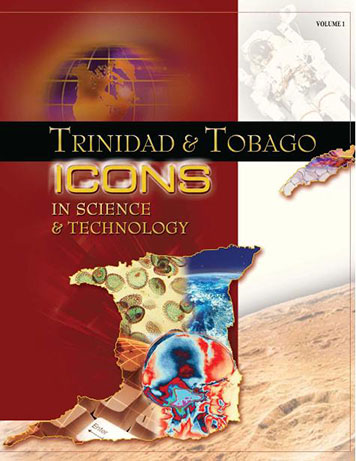
Trinidad & Tobago Icons in Science & Technology (Vol I)Trinidad and Tobago Icon in Science and Technology presents the lives of 39 individuals who have attained a high level of distinction in their chosen fields in science and technology. Many of them are internationally recognised for their achievements as educators, healers, researchers, innovators, institution builders and policy makers.
|
Trinidad & Tobago Icons in Science & Technology (Vol II)
|
|
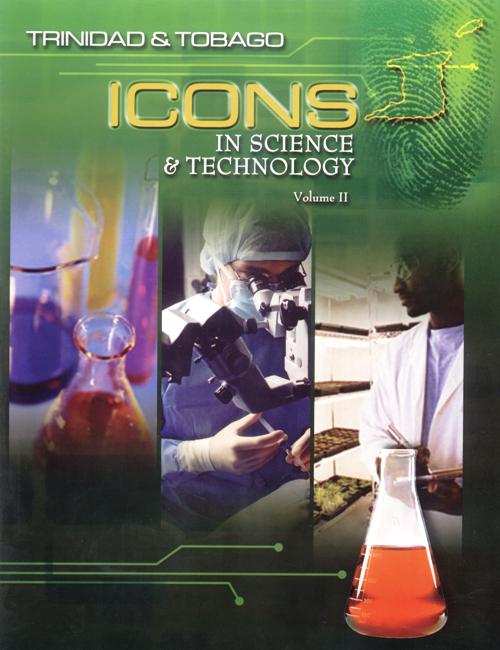
Trinidad & Tobago Icons in Science & Technology (Vol II)NIHERST is pleased to present this second volume in the Trinidad and Tobago Icons in Science and Technology series, which was launched at the end of 2005. The series showcases the lives and achievements of individuals who have attained a high level of distinction, world-class in most cases, in their respective spheres of endeavour. While the main focus of the series is on individuals who worked, or are working, in strictly scientific and technology-related fields, the scope also extends to persons who, through their creativity and hard work, have distinguished themselves in other disciplines and professions, and whose innovations are, nevertheless, considered scientific and/or technological. By including their profiles, the aim is to illustrate that there is ‘science in everything’, and that knowledge and human ingenuity, applied to any area of activity, including the cultural or artistic, can lead to tremendous innovations and new technologies which will enhance and spur the development of that arena.
|
Kids Booklet: Icons in Science Technology and Innovation (Vol I)
This first publication is produced for distribution free of charge to schools throughout the Caribbean by CCST focal points. It is a valuable reference book, which will no doubt serve to inspire youngsters to pursue careers in science and to emulate the achievements of the featured Icons.
|
|
Our famous scientists are from different islands in the Caribbean. These are the people whom we call "Icons," because their work in science has made them scientists of excellence. You will learn what their lives were like and what great things they did to improve their country and sometimes even the whole world. You will learn about the difficulties they faced in becoming a scientist and what inspired them to excel. You will discover the very different areas of science that they worked in and what legacies they left. You will see that science is in the sphere of life. We hope that this book will inspire you to have great new ideas and invent wonderful things so that you may become a famous science yourself. |
Caribbean Icons in Science Technology and Innovation (Vol II)
The second volume continues the series by profiling 38 outstanding individuals who have excelled in science and science-related fields, from agriculture to virology. These achievers represent 11 countries in the Caribbean, and their stories span more than 150 years of Caribbean history.
Our Icons defended natural habitats, dived for interesting artefacts, managed outbreaks of disease, discovered viruses, protected the region’s crops, chased hurricanes, and also braved battlefields to treat injured soldiers. They often enjoyed full, well-rounded lives, as shown by our line-up, which includes a war veteran, an Olympian, a preacher and a middle-aged marathon runner!
The lives of these individuals are a testament to the boundless potential of Caribbean people, who represent such a small fraction of the world’s population. By showing how our Icons used the few opportunities they had to triumph over their obstacles, we hope to inspire our young readers to shine in their own fields, and to become the Caribbean Icons of this new century.
Icons in this publication
|
|
||||||||||||||||||||||||||||||||||||||||||||||||||||||||||||||||||||||||||||||||||||||
|
|
|
NIHERST and the Caribbean Council for Science and Technology (CCST) are proud to introduce Caribbean Icons in Science, Technology and Innovation, a project that aims to educate our community on the outstanding achievements of Caribbean nationals in the fields of Science, Technology and Innovation. The project highlights some of the outstanding sons and daughters of our region, who have taken their place among the leading luminaries in the world of science.
It is hoped that the documentation and highlighting of their personal achievements will both provide a valuable information resource as well as a source of inspiration to youngsters keen on pursuing careers in science and technology.
Our Caribbean Icons are men and women, who faced unique challenges and were motivated and inspired along the way by various circumstances. Within these pages you are invited to follow the stories of these remarkable individuals, recount their efforts, and be inspired to excel.
NIHERST and CCST owe a deep gratitude to the OAS Inter-American Agency for Co-operation and Development for providing the financial support for the realisation of this project.
|
Message from |
|||
|
|
CCST and NIHERST are pleased to provide readers with a new source of comprehensive information on the life, work and accomplishments of Caribbean scientists. This effort showcases the wealth of brain power and talent that exist within our tiny region and the contribution our scientists have made to the advancement of the region and the global community as a whole. We hope that students will gain new insights into the interesting world of science and be inspired to also excel in careers in the sciences. We also believe that by educating the public about the achievements of our scientists, our leaders would be encouraged to invest in innovation and scientific research and development. I take this opportunity to congratulate and thank all those persons and institutions that contributed towards the development of this valuable resource. Felix Gregoire, |
|
Icons in Science
Scientists help us understand our world and the reasons why things exist, how they work and develop. Through inquiry, observation and dedicated research they make discoveries and provide a new understanding of things that can improve the quality of life. The Caribbean has nurtured scientists who have made pioneering discoveries and important contributions to science that span a variety of disciplines. These individuals have brought the region international recognition. These are our Caribbean Icons in Science.
 |
Nazeer Ahmad Soil Scientist |
 |
Rudranath Capildeo Mathematician |
 |
Edsel Edmunds Nematologist |
 |
Oliver Headley Chemist/Solar Scientist |
 |
Julian Kenny Zoologist |
 |
George Moon Sammy Food Chemist/Food Technologist |
 |
Arnoldo Ventura Virologist |
Icons in Science Education
Successful educators nurture and enrich the minds of their students, and often become role models that inspire students to excel and contribute to the common good. Their legacy is evidenced in their students’ academic and overall development. Their work ensures that the next generation of scientists is well-equipped with the knowledge, attitudes, and skills for the progressive development of science and society. These are our Caribbean Icons in Science Education.
 |
Harry Annamunthodo Surgeon |
 |
Julian Duncan Botanist |
Icons in Medicine
The medical doctor provides the best possible treatment for the sick. The medical researcher provides the insight and solutions to effectively cure illnesses. Our Caribbean Medical Icons have been pioneers in their respective fields and have brought our region international acclaim for their work and achievements that span the globe. These are our Caribbean Icons in Medicine.
 |
George Alleyne Medical Researcher - Public Health and Tropical Diseases |
 |
Emmanuel Amoroso Biologist |
 |
Cecil Cyrus General Surgeon |
 |
John Golding Orthopaedic Surgeon |
 |
Kenneth Standard Public Health Pioneer |
 |
Garth Taylor Ophthalmologist |
Icons in Innovation
Innovators think into the future and are constantly improving technology and creating new impacts on society. Caribbean people have contributed to ground-breaking research and have been the vanguards of inventions that have changed life in the 20th century and set new trends for the new millennium. Their inquisitive minds and love for science have changed the way technologies used in outer space exploration and the way everyday products in the home and workplace look, feel and sound. Meet our Caribbean Icons in Innovation.
 |
Stephen Bennet Veterinarian |
 |
Andre Cropper Electrical Engineer |
 |
John Ewen Chemist |
 |
Kenrick Lewis Catalyst Chemist |
 |
Robert Rashford Design Engineer |
 |
Cardinal Warde Physicist |
Andre Dominic Anthony Peter Cropper
- Electrical Engineer
|
|
“I wanted to invent something of which no one else had yet thought of or created.” - Dr Andre Cropper “In my job, I am paid to envision trends in technology, five to ten years into the future... I am responsible for new product development and research in ‘potentially disruptive technologies’ that exceed consumer’s expectations.” |
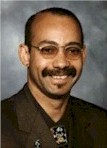
Dr Andre Dominic Cropper is a research scientist and innovator whose inventions are “changing the way we look at TV.” He is the mastermind behind a new ground-breaking Flat Panel Display utilising a slim film Touch Screen made from thin layers of diamond called Organic Light Emitting Diode (OLED). The display is self-luminating which means it emits light, excluding the need for bulky back lighting found currently in televisions, mobile phones and computers. This astonishing discovery “will replace other technologies such as liquid crystal displays and plasma display screens” since the technology will enable equipment such as television sets and computer monitors to be made 3mm thick allowing them to be lighter, and so more portable, and requiring very little power. Quite a revolutionary discovery with great potential but not surprising for this passionate, futuristic thinker with an intense drive for innovation and a love for engineering. He also holds two patents for the inexpensive manufacturing of thin layers of laboratory-produced diamond for potential use in TV displays.
|
|
|
|
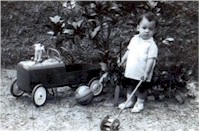
Andre Cropper was born on 4th August 1961 in St James, Trinidad. He attended Newtown Boys R.C. Primary School. His curious mind was nurtured by supportive parents who attempted to answer the technical questions. In 1973 he entered Fatima College, a top boys’ secondary school, where he was excited by Mathematics and fascinated by Physics. He took apart electronic appliances at home and put them back together as best as he could, learning how they operated in the process. It was then that he knew he wanted to pursue a career in Electrical Engineering.
Young Cropper was not only an academic, but he was also an athlete. He was a dedicated swimmer, with his days beginning at 4:30 a.m. when he would walk to the Flying Fish swim club’s pool and swim before he went to school. He was a member of the national swim team, and represented Trinidad and Tobago regionally and internationally during the 1970s.
|
|
|
|
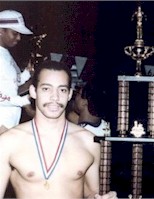
He went to the United States in 1978 to pursue a Bachelor’s degree in Electrical Engineering at Howard University in Washington D.C. From his first semester, he was placed on the Honour Roll and Dean’s List for outstanding students. While he was still an undergraduate, his lecturer asked him to teach a graduate laboratory course and he graciously accepted. At that time he was also eligible to be selected to the national swim team to represent his country for the 1984 Olympics. The swimming enthusiast was elated but torn between this passion and his academics, since he would have to train for a year before the Olympics and this meant taking a year off from University. He reluctantly declined the offer and focused on his studies. In May 1984, he graduated with honours. He immediately started his Master’s degree and graduated with honours in 1987.
|
|
|
Dr Cropper Teaching at UWI, St Augustine |
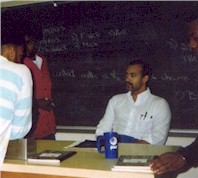
Upon graduation, he began teaching at Norfolk State University in Virginia. In his spare time, Cropper began research on diamond technologies, and the use of thin layers of laboratory-developed diamonds as a semiconductor for new technological applications. He sent a proposal of this work to NASA, which was impressed by the idea. Since he did not have his Ph.D., NASA stipulated that he would have to hand over his research to “a qualified researcher” and work under that person. He refused the offer and decided to pursue a doctoral degree and develop his idea. In 1995 he obtained his Ph.D. in Electrical/Materials Engineering from Virginia Polytechnic Institute and State University in Blacksburg, Virginia. On completion of this doctorate, Dr. Cropper returned to his homeland where he began teaching at the University of the West Indies in the Department of Electrical Engineering.
|
|
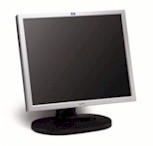
He joined Eastman Kodak Company in Rochester, New York in 1999 as a Research Associate and Project Manager of OLED applications. This field challenged his inventiveness and futuristic thinking. His research work at Kodak included OLED applications, thin film diamond growth, production and its novel applications, new semi-conducting electronic and optoelectronic materials, flat panel display technologies, remote sensing, image exploitation and compression, information extraction and motion estimation. His current position is now that of Technology Development Manager for the Sensor Products within ITT Industries Space Systems Division.
|
|
|
|
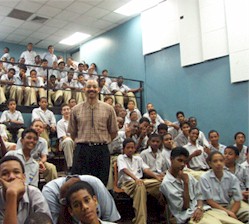
In his free time, Dr. Cropper helps to promote science awareness and to inspire young scientists. He conducts workshops and guest lectures at community schools and universities. He also serves as a role model and a liaison with kindergarten, elementary and secondary schools. He returns to Trinidad regularly to give back to the young people of his homeland. His vision is to promote science and engineering awareness and to encourage young innovative minds to develop and attain their full potential.
He advises parents to “nurture curious minds (of their children). Listen to their questions and try to answer them (honestly). If you do not know the answer, take them to the library”. He urges young people to “respect your elders and your family and learn from their knowledge and experiences”. He reflects that even to this day, he still seeks advice from his parents who motivated him, and who continue to be his role models.
Dr. Cropper is happily married to Natalie Rogers, a professional dancer and dance school administrator at Garth Fagan Dance Company. They have one child. Apart from his love for swimming, Dr. Cropper enjoys scuba diving, reading, dancing, nature walks and fine arts.